

Spousal Sponsorship Service
 Listen to this article
1:38 What is a spousal sponsorship application?
2:46 Meeting the criteria of your spousal sponsorship application
4:27 Inland Vs. Outland
5:22 Common-law Vs. Marriage
6:10 Haw fast is the application process?
7:20 Can I speed up my application?
9:27 How fast can I complete this application?
10:49 Marriage Papers
11:52 Visitor Visa
15:16 Immigroup service types
18:43 How does payment work?
Start your Spousal Sponsorship Service
Downloadable assessment form also available, here
Related Services:
Sponsorship Review Service (Order from): Spousal Sponsorship Review & Support Service: Save money and do most of the work yourself – you can add on different services on to the review to reflect your personalized needs.
Spousal Sponsorship Appeals: It can happen and when it does you need the right team backing you.
Marriage Abroad Documents – please go to Paid Service > Marriage Documents
Full Service vs. Review Service
| Immigroup Service | Preparing for the Sponsorship application 30-minute phone consultation $100 |
Full Review Sponsorship Application $750 |
Full-Service Sponsorship Application $3500 |
Add on Service Cost |
|---|---|---|---|---|
| Beginning phone consultation | YES | NO | YES | $250 |
| Review of application before filing | NO | YES | YES | $750 |
| Email or phone support while you are completing your application | NO | NO | YES | $225 per hour |
| Fill out the application for you | NO | NO | NO | $225 per hour |
| Review and clean up your Sponsorship Letter | NO | NO | YES | $225 (starting from) |
| Summary Letter | NO | NO | YES | $500* |
Use of Representative filed, so that we can deal with the government on your behalf.
|
NO | NO | YES | $500 |
| Filing your application with the government (& putting the package together) | NO | NO | YES | $150 + courier |
| Checking the status of your application | NO | NO | YES | $150 setup fee (4 checks) |
| Communicating directly with the government if any request comes in | NO | NO | YES | $225 per hour |
| If an interview is requested, prepping you to get you ready for that interview | NO | NO | YES | $225 (1 hour) |
| Inside Canada Work Permit | NO | NO | NO | $500 |
| Urgent filling of your application within 5 to 10 business days | NO | NO | NO | $6500* |
| Extending your visitor/work visa | NO | NO | NO | Please call |
| Mailing a paper version of sponsorship application | NO | NO | NO | $50 + courier |
STEP BY STEP GUIDE FOR THE SPOUSAL SPONSORSHIP FULL SERVICE
- Download our order form and assessment questionnaire.
- Fill out our order form and questionnaire and email back to us at [email protected]
Alternatively, you can fax or mail it in (address and fax number on our order form). - Someone from our office will contact you within 1-2 business days (For urgent filing applicants your appointment can be the same day).
- 30 to 60 minute phone consultation or in person meeting will be scheduled (usually with in 5 to 10 business days, from the day you first sent in your order form). The meeting will have the following agenda:
- Do you meet all basic requirements to file this application?
- Will the application be filed inside Canada or outside Canada?
- How strong or weak is your case & improvements that will be implemented
- Making sure you have all the correct applications
- Talking about the supporting documents you will need to collect
- A schedule will be setup between yourself and a consultant to answer questions as you are completing the application & collecting supporting documents
- Answer questions and address concerns.
- Start filling out the application and communicating with your consultant
This step usually takes 2-4 weeks (depending on your ability to get documents back to us). - Once completed your application will have the following done to improve it:
- Review and clean up application
- Review supporting documents & make additional requests from you if needed
- Review and clean up sponsorship letters
- Create a summary letter
- Assemble your sponsorship package and getting it ready
- Your consultant will mail out your sponsorship package.
- Your consultant will monitor the progress of your application:
- You can request a status checkup (please wait 1 month before making your first request)
- You consultant will handle all communications from the government (i.e. additional documents)
- If an interview is requested from the government, you consultant will train your sponsee for 1 hour before their interview date.
- When biometrics and medical is requested your consultant will step you through the process.
- Date of application approval – we will notify when and how to pick up your Canadian immigration documents. Your spouse is now a permanent resident of Canada.
Immigroup’s Sponsorship Terms of Service
- We are on your side so please let us know anything that you feel could cause problems so we can deal with it from the beginning. Otherwise, if we end up finding out later and need to deal with a problem down the line, and it requires a lot of our resources to deal with and fix, extra hourly charges will apply.
- If we feel that your application is so weak that we advise you not to file until certain conditions are met, you will have two options, 1) take our advice, or 2), tell us to file the application anyway, but we reserve the right not to file a Use of Representative form. What this mean is Immigroup’s name will not be associated with this application in the eyes of the Canadian government. We will still give you support (i.e. helping you communicating with the government), but if requests from the government intensifies to such a point that you have exhausted the legal hours you already paid into, you will again have a choice to pay by the hour or manage it on your own.
- Each licensed immigration specialist will have their own set of terms of service they will ask you to agree to and sign before starting.
Additional Sponsorship Services You Can Request
| Immigroup Service | Included in Full-Service Sponsorship Application | Add on Service Cost |
|---|---|---|
| Beginning phone consultation | YES | |
| Review of application before filing | YES | |
| Email or phone support while you are completing your application | YES | |
| Fill out the application for you | NO | $225 per hour |
| Review and clean up your Sponsorship Letter | YES | |
| Summary Letter | YES | |
Use of Representative filed, so that we can deal with the government on your behalf.
|
YES | |
| Filing your application with the government (& putting the package together) | YES | |
| Checking the status of your application | YES | |
| Communicating directly with the government if any request comes in | YES | |
| If an interview is requested, prepping you to get you ready for that interview | YES | |
| Inside Canada Work Permit | NO | $500 |
| Urgent filling of your application within 5 to 10 business days | NO | $6500* |
| Extending your visitor/work visa | NO | Please call |
| Mailing a paper version of sponsorship application | NO | $50 + courier |
We fill out the spousal sponsorship application for you – $225 per hour (approximately $1200 to $1800)
- You and your consultant will schedule in a meeting either in person or phone/Skype/Zoom and do the application together (they ask you questions, you give the answer, and they type it for you).
- Please be ready to make yourself available so the consultant can ask you questions.
- On average this service takes 8 to 12 hours to complete and takes 2 to 3 weeks.
Canadian Work Permit application submitted at the time of the spousal sponsorship application or after: $500
Your spouse must already be in Canada for this service.
Urgent filling of your application within 5 to 10 business days: $6500
- This service has almost everything included in the above list.
- You must make yourself available for at least 15 hours and we need access to your sponsored spouse (total 5 hours).
- Requesting extra documents like, birth, marriage certificates, translation, notarization or apostille services, couriers are all extra.
Note: We can’t guarantee filing your application within 10 business days, some things in life are simply out of our control. However we work to make the filing as quick as possible.
If you need help in extending student or visitor visas, please speak to your representative for pricing.
Spousal Sponsorship Full Service FAQS
Tip: To open some PDF files you may need to save them to your desktop and then open them.
How do I pay for Immigroup’s Spousal Sponsorship service? How does payment work?
You can choose to make a lump sum payment, but most people choose to pay in installments. Here is the installment plan:
- The first payment is taken at the time we receive your order from: $225
- The second payment is taken after your phone interview is completed with the consultant: $1000
- The third payment is taken 4 weeks after you have started your application OR before we start reviewing your application, whichever comes first: $1000
- The fourth and final payment is taken at the time your spouse receives a decision on the application: $1250
*taxes, government fees, and couriers are not included and need to be paid on top of the service fees.
REQUIRED FORMS FOR SPONSORING YOUR SPOUSE TO CANADA (PLEASE DOWNLOAD):
- Application to Sponsor, Sponsorship Agreement and Undertaking (IMM 1344) – Sponsor & Applicant fill out
- Sponsorship Evaluation and Relationship Questionnaire (IMM 5532) – Sponsor & Applicant fill out
- Generic Application Form for Canada (IMM 0008) – application to be completed by the sponsored spouse or partner
- Sponsored Spouse / Partner Questionnaire (IMM 5490) – questionnaire to be completed by the sponsored spouse or partner
- Schedule A – Background Declaration (IMM 5669) – sponsored spouse’s background declaration for admissibility to Canada
- Additional Family Information (IMM 5406) – information about sponsored spouse’s family, completed by the sponsored spouse and every adult dependent child
- (if required) Statutory Declaration of Common-Law Union (IMM 5409) – a legal declaration necessary when sponsoring your common-law spouse only
- Document Checklist (IMM 5533) – the list of all IMM application forms you may need to submit for this application
- Use of Representative (IMM 5476) – Allows an Immigration professional (RCIC or lawyer) to act and speak on your behalf with the Government of Canada (IRCC).
POTENTIALLY REQUIRED FORMS FOR SPONSORING YOUR SPOUSE OR PARTNER TO CANADA:
- Sponsorship Evaluation (IMM 5481) – a supplementary document regarding your eligibility to sponsor where a dependent child is involved.
- Financial Evaluation (IMM 1283) – may be required where a dependent child with children is involved.
- Additional Dependants (IMM 0008DEP) – a supplementary form for any dependants the sponsored spouse may have when more than 5 dependants on the application
- Forms specific to certain countries (if applicable).
IF YOUR SPOUSE IS OUTSIDE OF CANADA: YOU WILL NEED THE FOLLOWING FORMS
If you are filing your Sponsorship application outside of Canada, you may need forms unique to your country or region. Here you have two options:
Spouse Otusde of Canada Option 1: Follow the instructions below to download your country/region-specific applications
.Notes:
- “My spouse” (and dependent children, if this applies): choose this is if you are marriage or are going to get married before the Sponsorship application is filed.
- “My common-law partner” (and dependent children, if this applies). You have lived together for at least one year in the same home.
- “What country does the person being sponsored reside in?”: Where does your partner live right now?
- “Do you need to submit documents issued by another country?”: Let’s say your partner lives and works in Mexico, then you would be picking Mexico because you will be filing the application outside of Canada and it will be reviewed by Canadian government staff in Mexico.
- “Add another country”: For example, your partner is living and working in Mexico but holds a Nicaraguan passport.
Spouse Outside of Canada Option 2: Ask Immigroup to provide the correct forms for you.
To do this:
- On the Immigroup Intake Form, on page 3, under ‘What are the main questions you need your representative to answer?’ please write “I need the correct Sponsorship applications for the country of _______________.”
- Once you’ve written this and completed the rest of the Immigroup forms, send it to us by email, fax, or mail. If we do not send you the correct forms within 2 business days, please email us at [email protected].
QUESTION: CAN MY SPONSORSHIP APPLICATION BE REFUSED?
Answer: Yes. We don’t want to scare you, but incomplete applications or applications missing enough documentary proof of your relationship will be refused or returned to you.
If your application is refused, you have to appeal.
Take a look at what a sponsorship appeal looks like (see photo below). It’s simply a nightmare to deal with and if you need to file an appeal you will need to hire an expert. This will be very costly. Also, applications like this can only be appealed if your application was filed outside of Canada.
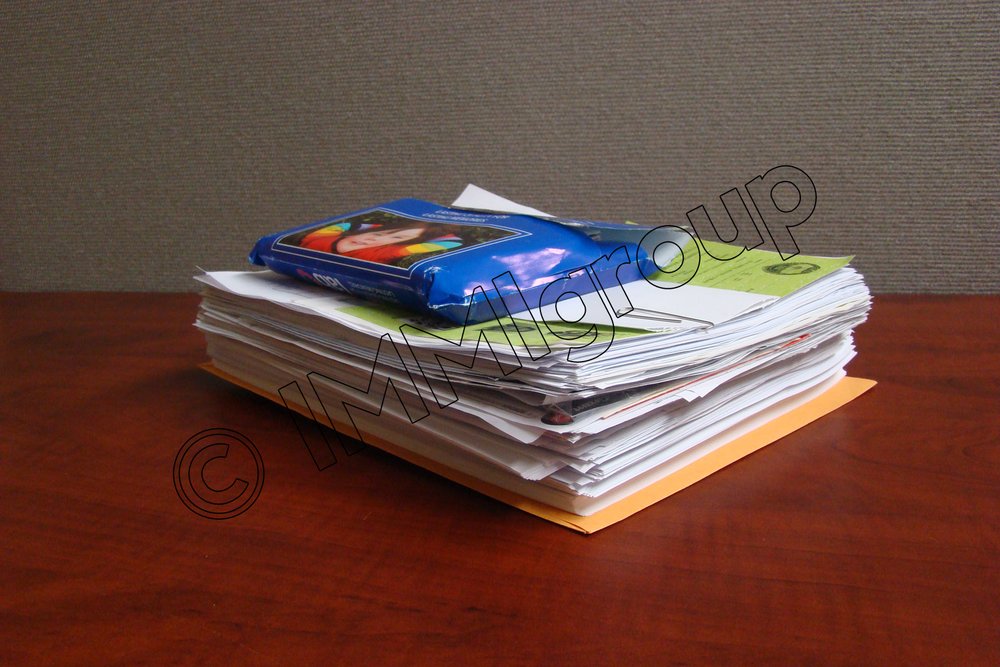
With that said, don’t worry about it. Just take your time with the application, do your homework, and get the level of support that you think is appropriate for your case.
With the right support, your case will be much stronger.
QUESTION: WHAT IS THE AVERAGE PROCESSING TIME OF A SPONSORSHIP APPLICATION?
Answer: The short answer is approximately one year, but you can check the timelines by following the video instruction below:
Tip: The timeline you find on the government’s website when they start processing your application does NOT show when they received your application. This causes a lot of confusion and it is hard to tell when they will start processing it. (Times vary depending on how busy they are and where your spouse or partner is located.) We’ve seen applications approved in a matter for a few months (outside of Canada) and over a year.
Remember the only thing that slows down a Sponsorship application is how well it is completed. A poorly completed application can take a lot longer to process.
QUESTION: WHAT IS THE BIGGEST ADVANTAGE OF USING IMMIGROUP’S SERVICES?
Answer: Anyone can fill out and file an application. But to fill it out and file it correctly, thus quickening processing times and reducing the risk of your application being denied, is something that takes time and practice.
Our Immigroup representatives are experienced specialists who can provide you with insightful support, while ensuring that your application is completed fully and accurately – a service that is well worth the cost.
QUESTION: I AM THINKING OF USING A LAWYER, CAN IMMIGROUP HELP?
Answer: We can definitely get you a lawyer to review your Sponsorship application. The price starts at CDN$1500 + Taxes. Please contact us for this service. All other services generally come at 50% increase in price from those charged by consultants.
QUESTION: WHY DOES IMMIGROUP USE IMMIGRATION CONSULTANTS OR PARALEGALS AND NOT LAWYERS?
Answer: It simply comes down to cost.
What most people don’t realize, because they are not in the immigration industry, is that, even if you are using a lawyer, in most cases, the law clerk or the licensed immigration practitioner that works for the lawyer is the person actually doing the application. The lawyer will review and file. The only exception to this rule is a lawyer that works alone, and most of the time this is because they are just starting in the industry.
If you’d like, we can forward your file to a lawyer, please speak to your Immigroup representative, we know some great people in the industry we trust.
The requirements for sponsoring your common law partner to Canada are slightly different than sponsoring your spouse. In general, it is harder to sponsor your common law partner than to sponsor your spouse you are legally married to. This is because you have to do more to prove your relationship is genuine.
Immigroup helps Canadians sponsor their partners. Sponsorship is our speciality.
Note: You must have cohabitated with your partner for at least one year in order to qualify to sponsor your partner for PR. Brief separations, such as work travel, are acceptable. Immigroup will help you prove it.
STEP BY STEP GUIDE FOR Our common-law SPONSORSHIP FULL SERVICE
- Download our order form and assessment questionnaire.
- Fill out our order form and questionnaire and email back to us at [email protected]
Alternatively, you can fax or mail it in (address and fax number on our order form). - Someone from our office will contact you within 1-2 business days (For urgent filing applicants your appointment can be the same day).
- 30 to 60 minute phone consultation or in person meeting will be scheduled (usually with in 5 to 10 business days, from the day you first sent in your order form). The meeting will have the following agenda:
- Do you meet all basic requirements to file this application?
- Will the application be filed inside Canada or outside Canada?
- How strong or weak is your case & improvements that will be implemented
- Making sure you have all the correct applications
- Talking about the supporting documents you will need to collect
- A schedule will be setup between yourself and a consultant to answer questions as you are completing the application & collecting supporting documents
- Answer questions and address concerns.
- Start filling out the application and communicating with your consultant
This step usually takes 2-4 weeks (depending on your ability to get documents back to us). - Once completed your application will have the following done to improve it:
- Review and clean up application
- Review supporting documents & make additional requests from you if needed
- Review and clean up sponsorship letters
- Create a summary letter
- Assemble your common-law sponsorship package and getting it ready
- Your consultant will mail out your sponsorship package.
- Your consultant will monitor the progress of your application:
- You can request a status checkup (please wait 1 month before making your first request)
- You consultant will handle all communications from the government (i.e. additional documents)
- If an interview is requested from the government, you consultant will train your sponsee for 1 hour before their interview date.
- When biometrics and medical is requested your consultant will step you through the process.
- Date of application approval – we will notify when and how to pick up your Canadian immigration documents. Your partner is now a permanent resident of Canada.
Immigroup’s Common Law Sponsorship Terms of Service
- We reserve the right to refuse your application because we feel your common-law status cannot be proven.
- If we feel that your application is so weak that we advise you not to file until certain conditions are met, you will have two options, 1) take our advice, or 2), tell us to file the application anyway, but we reserve the right not to file a Use of Representative form. What this mean is Immigroup’s name will not be associated with this application in the eyes of the Canadian government. We will still give you support (i.e. helping you communicating with the government), but if requests from the government intensifies to such a point that you have exhausted the legal hours you already paid into, you will again have a choice to pay by the hour or manage it on your own.
- Each licensed immigration specialist will have their own set of terms of service they will ask you to agree to and sign before starting.
What’s included in a common-law sponsorship application?
The cost is higher than Immigroup’s full service spousal sponsorship application because you have to prove your relationship status. In addition to all the services included in the full service application, a common-law sponsorship application also includes the following:
- Assistance with your common-law declaration (IMM 5409) including help with finding a notary, if necessary
- Review of your proofs of common-law status – in order to you prove your common-law status you need to provide proof of cohabitation, including copies of the following:
- proof of a shared address (ownership or lease, insurance documents, IDs with the same address)
- shared utility bills (electricity, heat, water, internet, cable, even phone)
Our consultants need to review these documents to make sure they are acceptable to IRCC, which is why the cost is higher.
The requirements for sponsoring your conjugal partner to Canada are slightly different than sponsoring your spouse or your common-law partner. In general, it is harder to sponsor your cojugal partner than to sponsor your spouse you are legally married to or a common-law partner you are currently living with. This is because you have to do more to prove your relationship is genuine.
Immigroup helps Canadians sponsor their partners. Sponsorship is our speciality.
Note: “Conjugal sponsorship” is nearly always intended for sponsorship of same-sex partners. If you are not in a same-sex relationship but are not yet married or in a common-law relationship, you will need to either marry or live together with your partner for a year
STEP BY STEP GUIDE FOR Our Conjugal SPONSORSHIP FULL SERVICE
- Download our order form and assessment questionnaire.
- Fill out our order form and questionnaire and email back to us at [email protected]
Alternatively, you can fax or mail it in (address and fax number on our order form). - Someone from our office will contact you within 1-2 business days (For urgent filing applicants your appointment can be the same day).
- 30 to 60 minute phone consultation or in person meeting will be scheduled (usually with in 5 to 10 business days, from the day you first sent in your order form). The meeting will have the following agenda:
- Do you meet all basic requirements to file this application?
- Will the application be filed inside Canada or outside Canada?
- How strong or weak is your case & improvements that will be implemented
- Making sure you have all the correct applications
- Talking about the supporting documents you will need to collect
- A schedule will be setup between yourself and a consultant to answer questions as you are completing the application & collecting supporting documents
- Answer questions and address concerns.
- Start filling out the application and communicating with your consultant
This step usually takes 2-4 weeks (depending on your ability to get documents back to us). - Once completed your application will have the following done to improve it:
- Review and clean up application
- Review supporting documents & make additional requests from you if needed
- Review and clean up sponsorship letters
- Create a summary letter
- Assemble your conjugal sponsorship package and getting it ready
- Your consultant will mail out your conjugal sponsorship package.
- Your consultant will monitor the progress of your application:
- You can request a status checkup (please wait 1 month before making your first request)
- You consultant will handle all communications from the government (i.e. additional documents)
- If an interview is requested from the government, you consultant will train your sponsee for 1 hour before their interview date.
- When biometrics and medical is requested your consultant will step you through the process.
- Date of application approval – we will notify when and how to pick up your Canadian immigration documents. Your conjugal partner is now a permanent resident of Canada.
Immigroup’s Conjugal Sponsorship Terms of Service
- We reserve the right to refuse your application because we feel your conjugal relationship cannot be proven to IRCC’s satisfaction.
- If we feel that your application is so weak that we advise you not to file until certain conditions are met, you will have two options, 1) take our advice, or 2), tell us to file the application anyway, but we reserve the right not to file a Use of Representative form. What this mean is Immigroup’s name will not be associated with this application in the eyes of the Canadian government. We will still give you support (i.e. helping you communicating with the government), but if requests from the government intensifies to such a point that you have exhausted the legal hours you already paid into, you will again have a choice to pay by the hour or manage it on your own.
- Each licensed immigration specialist will have their own set of terms of service they will ask you to agree to and sign before starting.
What’s included in a conjugal sponsorship application?
The cost is higher than Immigroup’s full service spousal sponsorship application because you have to prove your conjugal relationship. In addition to all the services included in the full service application, a conjugal sponsorship application also includes the following:
- Assistance with proving that you cannot marry your partner nor can you live with them – this includes proof of laws that prohibit same-sex marriage in your partner’s country and proof your partner could not come to Canada to marry.
- Review of your proofs of your conjugal relationship – in order to prove you have a conjugal relationship you need to provide evidence including:
- Proof of communication (emails, texts, phone records, letters if applicable)
- Proof of visits, ideally (photos of the two of the two of you together, airplane tickets, shared expenses while visiting)
- A more detailed sponsorship letter – for conjugal sponsorship applications it is even more important to submit a letter documenting your relationship as there is less proof of the relationship existing than with marriages (which have marriage certificates) or with common-law partnerships (which have shared bills etc.)
Our consultants need to review these documents to make sure they are acceptable to IRCC, which is why the cost of this application is higher. If you want to make your life simpler, you should find a way you and your partner can legally marry in Canada or another country which allows same-sex marriage.
Common-Law Sponsorship to Canada
A common-law partner is a person who has lived together with the sponsor in a conjugal relationship for at least one year. In a common-law marriage, there is no document to prove that a couple is living together. A common-law marriage exists from the day a couple decides to physically live together. To qualify under the Family Class, Canadian immigration law requires a couple to prove that they have lived together continuously for at least one year. Documents that may prove the existence of a common-law relationship include:
- Joint bank accounts
- Joint credit cards
- Proof of property purchased in both names
- Invoices in both names
- Lease agreement showing both names
- Correspondence/bills sent to either party at the same address
- Insurance policies showing the other partner as beneficiary
Government Fees
In addition to the legal fees paid to a consultant or lawyer to assist you with this process, the applicant must also pay a fee to the Canadian government for filing their application. Please see the fees below:
| Processing Fees | Number of Persons | Amount Per Person | Amount Due |
| Sponsor | 1 | $75 | $75 |
| Principal Applicant | 1 | $475 | 475 |
| Principal applicant under 22 years of age and a dependent child of the sponsor, a child to be adopted or an orphaned family member that is neither married nor in a common-law relationship. | x $75 | ||
| Family member 22 years or older, or who is married, engaged or in a common-law relationship, regardless of age | x $550 | ||
| Family member who is under 22 years and who is not married, engaged or in a common-law relationship | x $150 | ||
| Right of Permanent Residence Fee | Number of Persons | Amount Per Person | Amount Due |
| Principal applicant (Spouse/common-law partner) | 1 | $490 |
Government application fees are subject to change at any time without notice and are not refundable from IRCC regardless of whether the application is approved.
Get Free Answers to your Questions
Sponsorship to Canada Requirements – The Sponsor
To become a sponsor, you have to meet the following requirements:
- be at least 18 years old; be a Canadian citizen or permanent resident,
- live in Canada or be able to prove that you will live in Canada when the sponsorship application is approved,
- prove that you can meet the basic financial needs of the person you are sponsoring and their dependent children.
You cannot sponsor someone if any of these situations apply to you:
- you have sponsored a previous spouse or partner within the last 3 yeas
- you receive social assistance other than disability;
- you are in bankruptcy protection;
- you have defaulted on any immigration-related financial obligations;
- you have been convicted of certain sexual and / or violent crimes;
- you were sponsored as a spouse or partner fewer than 5 years ago;
- you are in jail or prison; you are under a removal order to leave Canada.
When you have sponsored someone to live in Canada, you are financially responsible for their well-being for between 3 – 10 years depending on their relationship to you and their circumstances. This means that if the person you have sponsored or their dependent receives social welfare benefits during this time, you are obligated to pay this money back to the province of their residence.
Responsibilities of the Sponsor
When you sponsor a spouse/partner (or other family member) you commit to looking after them while they settle in Canada. As part of the application, you will be completing and signing multiple forms that pledge you to take care of spouse. These are the two forms and what they commit you to:
Sponsorship Undertaking
This is a legal pledge signed by you the sponsor to the Minister of Immigration, Refugees and Citizenship Canada (IRCC) where you swear to provide for your sponsored spouse and any dependent children they are bringing with. You pledge to supply them with the following:
- Food,
- Clothing,
- Utilities,
- Personal Requirements,
- Shelter,
- Fuel,
- Household supplies,
- Health care not provided by public health care services such as eye and dental care. NOTE: In Ontario there is a 3 month waiting period from the date of arrival of the sponsored spouse before they are eligible for OHIP<ohip< span=””> (Ontario Health Insurance Plan) so you must also look after any health care needs they have in the initial 3 month period after landing.</ohip<>
Sponsorship Agreement
This is a legal agreement between you the sponsor and your spouse, and covering any dependent children. It involves the following legal commitments:
- You agree to provide the basic necessities for your sponsored spouse (and any dependent children) covered in the Undertaking (see above). You agree to this so the government has assurance that your spouse will not go on social assistance.
- Your spouse agrees to seek financial assistance from you if they are unable to provide for their own basic needs, before going to the Government to apply for social assistance.
- You both agree that the period of the Undertaking for spousal sponsorship is 3 years from the date the sponsored spouse receives their permanent residence (inland), or from the day your sponsored spouse lands in Canada as a permanent resident (outland). If you are committing to care for a dependent child as well, then you the sponsor are responsible for the child for a period of 10 years or until they are 25 years old, whichever is longer.
Read about what happens if you fail to meet your responsibilities.
Requirements to be Sponsored to Canada
To be sponsored by a Canadian citizen or permanent resident to live in Canada, you will have to follow certain procedures, including:
- undergo a medical examination;
- if you are being sponsored as a spouse or partner, you must be at least 16 years old;
- obtain fingerprints to pass criminal and security background checks;
- obtain a passport and in certain countries an exit visa;
- attend an interview at a Canadian visa office if required.
Sponsorship of Children to Canada
Children can be included as dependants in a spousal or partner sponsorship application, but an application must be filed for each child in addition to the main applicant (the spouse or partner). Of, if you are already a permanent resident or citizen of Canada, you may sponsor a child living outside of Canada. In order for a child to be sponsored to live in Canada, they have to meet the following requirements:
- under 22 years old and not married or in a common-law relationship, OR
- over 22 years old but has been in school since before the age of 22 and is financially dependent on the parent, OR
- over 22 and is unable to care for themselves due to a medical condition.
Sponsorship of other family members to Canada
Sponsorship of parents and grandparents is still on hiatus until January 2, 2014. However, they may be eligible to apply for a Visitor Visa or Super Visa to stay in Canada for up to 2 years at a time.
Documents that prove relationship of the sponsor to a parent:
- Sponsor’s birth certificate
Documents that prove relationship of the sponsor to a grandparent:
- Sponsor’s birth certificate
- Sponsor’s parent’s birth certificate through whom the sponsor is related to the sponsored grandparent
Humanitarian and Compassionate Considerations
If a relative falls outside of these categories, you may still be able to sponsor them to live in Canada on humanitarian and compassionate (H&C) grounds. Contact us for more information at 1-866-760-2623.
Possible Reasons for Sponsorship Refusal
Ask about our success rate
IRCC can refuse a sponsorship application for many reasons. Here are some of the most common ones:
- The relationship is not genuine. For example, if IRCC believes that the relationship exists only for the sponsored person to immigrate to Canada, the application will be refused.
- The sponsor does not meet the financial requirements.
- The necessary supporting documents have not been included in the applications.
- The person you wish to sponsor does not qualify through the family class.
- The person being sponsored did not meet the medical requirements.
- The person being sponsored is inadmissible to Canada due to criminal convictions. In this case, the person may be able to obtain a Temporary Residence Permit (TRP) and still be sponsored to live in Canada. Please refer to our TRP page and contact us for more information at 1-866-760-2623.
How can we help you bring your loved one to Canada?
Ask about our success rate
To discuss your options for a sponsorship application, contact us for a consultation or just call us at 1-866-760-2623. We can determine your eligibility to sponsor as well as discuss how you can prove you meet the requirements. We will also go over the entire application process so that you understand what you and your loved one will have to do.
Immigroup will assist you throughout the entire application process from start to finish, including:
- Determining your eligibility to apply;
- Determining the likelihood of success for your application;
- Ensuring your forms are complete and accurately reflect the details of your case for maximum chance of success;
- Ensuring you have the necessary and appropriate documents to support your application;
- Providing guidance on the privileges and responsibilities of sponsorship and permanent residence;
- Advising how someone who is inadmissible to Canada may still be sponsored;
- Offering Top Priority service for extremely urgent cases;
- Determining the best way to proceed once the outcome of your case is reached (renewing permanent resident card, becoming a Canadian citizen, sponsoring additional family members, etc.)
Contact us for a consultation to assist you with your application. Our number is 1-866-760-2623.
How to Organize a Sponsorship Application
Sponsorship applications gigantic so it is important that you organize your application in a way that IRCC will understand. For this example of how to organize a sponsorship application, we’re going to take the most common example: sponsoring a foreign spouse.
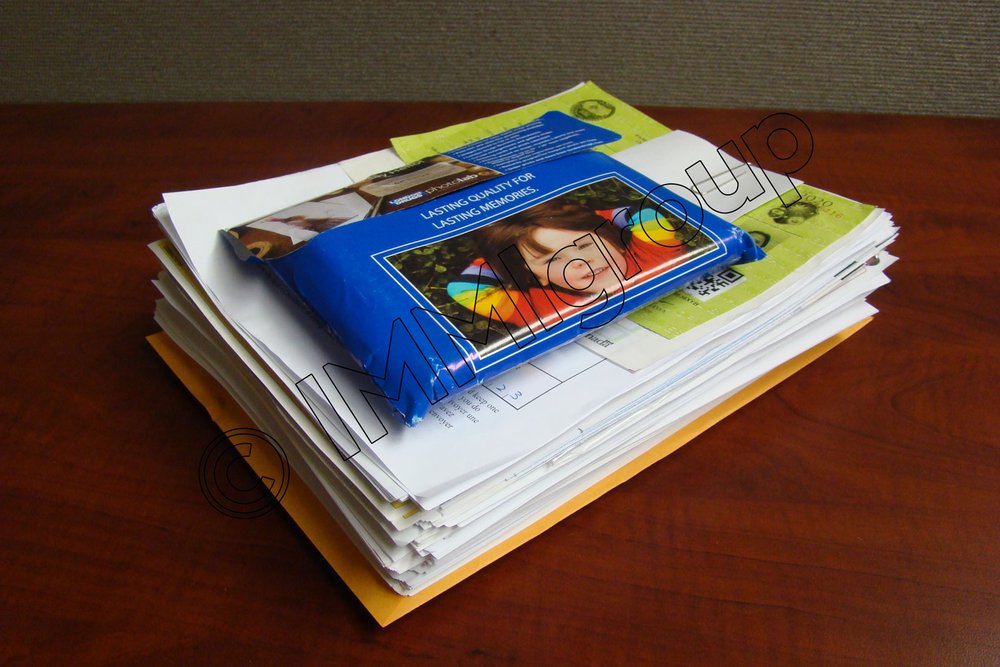
You will want to include as much information as possible in as organized a way as possible. Some people breakup their application into separate folders within the same envelope or box. It’s up to you how seriously you take that part, but you will need to show the officer how to proceed through the stack of paper you’ve provided.
- Cover letter
- Table of Contents
- Sponsor’s Application Forms and supporting documentation
- Sponsored Spouse’s Application Forms and supporting documentation
- Proofs of Your Relationship
Cover Letter
In the cover letter, explain that you are applying for either inland or outland sponsorship, and give the vital details (names, dates of birth, citizenships, locations, etc.) of both the sponsor and the spouse or partner to be sponsored. You should also indicate what your relationship status is (married, engaged, common-law, conjugal).
Table of Contents
You can include your table of contents in your cover letter or attach it as a separate piece of paper, as long as it’s prominent. You have two choices here:
- Make a general table of contents that outlines all three sets of documents you will be providing and then create individual tables of contents for the other parts OR
- Itemize every single form and document you’ve included in your package in this table of contents.
Which you choose is up to you – there is no right way – but the table of contents should match how you’ve organized your package. If it doesn’t, then there was no point in creating a table of contents in the first place. Make sure to include page numbers!
Make sure to include the document checklist (either the IMM 5491 for outland applications or the IMM 5443 if it’s an inland application).
Let’s assume this is an “outland” application, i.e. the spouse or partner is still overseas.
Sponsor’s Application Forms and Documents
If you choose to have individual tables of contents for each section, you should make the sponsor’s table of contents the very first page.
- Table of Contents (see above)
- IMM 1344 Application to Sponsor, Sponsorship Agreement and Undertaking, fully completed
- IMM 5481 Sponsorship Evaluation, fully completed
- IMM 5540 Sponsor Questionnaire, fully completed
Sponsored Spouse’s Application Forms and Documents
If you choose to have individual tables of contents for each section, you should make the sponsored spouse’s table of contents the very first page.
- Table of Contents (see above)
- IMM 0008 Generic Application Form for Canada, fully completed with the validation page at the front
- IMM 000DEP Additional Dependants/Declaration, fully completed
- IMM 5669 Schedule A – Background Declaration X number of adults being sponsored (for example, if there are no adult children being sponsored, you would complete one form), fully completed
- IMM 5406 Additional Family Information Form X number of adults being sponsored, fully completed
- IMM 5490 Sponsored Spouse/Partner Questionnaire, fully completed
- Additional forms required for citizens/residents of the country that the sponsored spouse is from
- Any documentation specifically related to questions in the above forms
- Document checklist for your country.
Proofs of Your Relationship
If you have chosen to have individual tables of contents, you should make that the first page, or attach it to the pack of photos.
- Table of Contents (see above)
- Photos (in a package, for example), sorted by date and event
- Communication records, sorted by type of communication, then by date – include a cover sheet if you think it would help, explaining what each record is and why you have provided it (and why you haven’t provided something, if that’s the case)
- Anything else you think will prove your relationship (and you should both organize this appropriately and explain why you have included the information, either here or in your cover letter).
Always err on the side of more rather than less evidence. If you are not sure whether or not to add something to your package, include it.
Additional Tips
- Do not staple anything. Paper-clip or otherwise clip forms and sections together and then clip those together with larger clips or put them in separate (named) folders or envelopes. You do not want to do anything to frustrate the officer.
- Don’t bind your package either.
- If you want, include tabs so that the officer can easily flip through your package.
- If you are not sending the original of something, explain why.
- Photocopy everything you submit – you need a record of what you’ve submitted to the government.
Good luck!


